
Planning to use a storage unit but unsure about what you can actually store? Whether you’re downsizing, renovating, or just need extra space, understanding what items are not allowed in storage units is essential for a smooth storage experience. These restrictions exist to protect your belongings, other customers’ items, and the storage facility itself.
Storage restrictions aren’t arbitrary rules designed to make your life difficult. They’re carefully considered policies that prevent safety hazards, legal complications, and property damage. Getting this wrong could result in contract termination, loss of your deposit, or even legal liability.
The good news is that most household items, furniture, clothing, books, and personal belongings are perfectly fine to store. Industry standards consistently allow these everyday non-hazardous items. The restrictions typically focus on items that pose safety risks, could cause damage, or create legal complications for the storage provider.
What makes an item prohibited in storage
Storage facilities develop their prohibited items lists based on several key factors that help maintain safety and legal compliance. Understanding these underlying reasons helps you make better decisions about what to store.
Why safety concerns drive most restrictions
Fire hazards top the list of safety concerns for storage facilities. Storage industry guidelines consistently rank flammable materials as the primary safety concern. Items like petrol, paint thinners, propane tanks, and other flammable materials can ignite spontaneously or create explosive conditions. Even seemingly harmless items like certain batteries can leak chemicals or generate heat that leads to fires.
Toxic substances pose another significant risk. Cleaning chemicals, pesticides, and industrial solvents can leak, creating dangerous fumes that affect other storage units and put facility staff at risk. Research shows these materials can produce harmful vapours when containers are damaged or temperatures fluctuate. These materials require specialised handling and disposal that standard storage facilities aren’t equipped to manage.
How legal liability shapes storage policies
Storage facilities must protect themselves from legal complications that could arise from storing certain items. Firearms, ammunition, and other weapons create liability concerns that most providers simply cannot accept. Even legally owned items can become problematic if they’re stolen from storage or used in crimes.
Stolen goods represent another legal minefield for storage operators. While facilities don’t typically investigate the origin of your belongings, they maintain the right to refuse items that could potentially create legal complications.
Which hazardous materials cannot be stored
Hazardous materials represent the largest category of prohibited items due to their potential for causing serious damage or safety incidents. Industry standards confirm these restrictions are non-negotiable across all storage providers.
What flammable items pose the biggest risks
- Petrol, diesel, and other automotive fuels
- Paint, paint thinners, and solvents
- Propane tanks and camping gas cylinders
- Fireworks and explosive materials
- Certain aerosol products under pressure
- Oil-soaked rags and materials
These items can ignite from temperature changes, static electricity, or chemical reactions. Fire safety experts note that even small quantities can cause significant damage to entire storage facilities, making them universally prohibited.
How toxic and corrosive substances create problems
Chemical products designed for cleaning, pest control, or industrial use often contain corrosive or toxic substances that can leak or off-gas dangerous fumes. Common examples include strong acids, pool chemicals, pesticides, and industrial cleaning agents.
Even household chemicals like bleach or ammonia-based cleaners can become problematic in storage environments where temperature fluctuations might cause containers to expand, crack, or leak.
What living things and perishables are banned
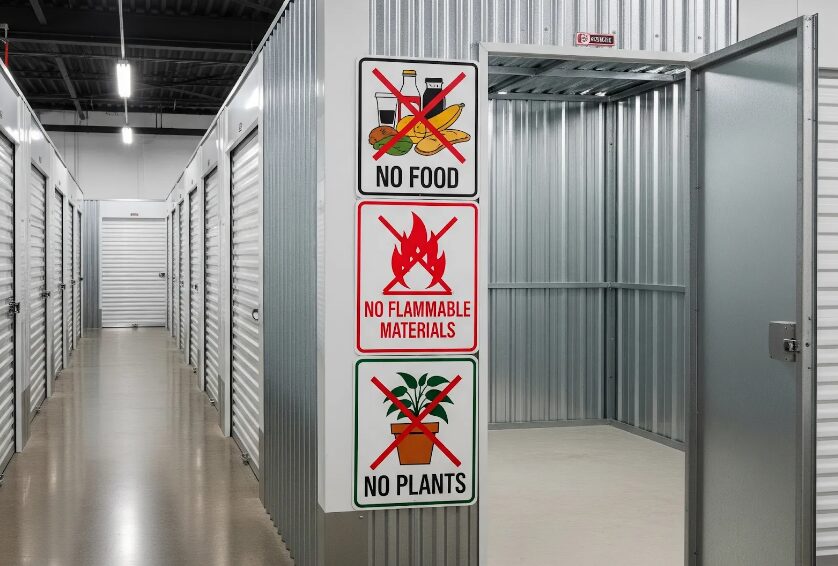
Storage units aren’t designed to support living organisms or preserve perishable materials, making these items universally prohibited across all storage types. Storage facility standards emphasise these units lack proper ventilation, temperature control, and access needed to sustain life.
Why can no living creatures be stored
Plants, pets, and any other living creatures cannot survive in storage environments. Storage units lack proper ventilation, temperature control, and access needed to sustain life. Beyond the obvious ethical concerns, deceased animals or plants create serious health hazards through decomposition.
This extends to items that might harbour living organisms, such as soil that could contain insects or bacteria, or wood that might house termites or other pests.
How perishable food creates multiple problems
Food items, whether fresh, frozen, or canned, create several interconnected problems in storage environments. Fresh food spoils rapidly, attracting rodents and insects while creating unpleasant odours that can permeate nearby units.
- Spoiled food attracts pests and vermin
- Decomposition creates strong odours
- Spilled liquids can damage flooring and belongings
- Mould growth can spread to other stored items
Even non-perishable food in sealed containers can attract rodents and may violate facility policies designed to prevent pest problems.
Which valuable and irreplaceable items should stay home
While storage facilities implement security measures, they cannot guarantee complete protection against theft or damage. Certain valuable or irreplaceable items are better kept elsewhere.
What items are too valuable to risk
Cash, jewellery, important documents, and collectibles represent significant financial value that storage insurance typically doesn’t fully cover. Storage industry research shows facilities generally limit liability to a few hundred dollars per incident, far less than the actual value of these items.
Family photographs, heirlooms, and sentimental items carry irreplaceable emotional value that cannot be compensated through insurance claims. These items are better kept in home safes or bank safety deposit boxes.
“The most common storage regret is losing irreplaceable family photos or documents to unexpected damage. Keep originals safe and store copies if needed.”
How electronics face unique storage risks
Electronics and computer equipment face particular risks in storage environments, especially units without climate control. Temperature fluctuations and humidity can cause condensation inside sensitive components, leading to corrosion and permanent damage.
Batteries in stored electronics can leak over time, damaging both the device and surrounding items. The combination of cold temperatures and condensation creates especially problematic conditions for cameras, laptops, and other sensitive equipment during winter months.
What legal restrictions affect storage contents
Beyond safety concerns, certain items face legal restrictions that prevent them from being stored in standard facilities.
Why are weapons and firearms typically prohibited
Most storage facilities prohibit firearms, ammunition, and weapons due to liability concerns and legal complications. Industry surveys confirm this prohibition stems from liability risks and insurance requirements. Even legally owned weapons can create problems if stolen from storage units or if ownership transfers without proper documentation.
The legal requirements around weapon storage vary significantly by state and territory, making it simpler for storage providers to prohibit these items entirely rather than navigate complex compliance requirements.
How stolen or illegal goods create facility liability
Storage facilities maintain the right to refuse items they suspect may be stolen or illegal. While they don’t actively investigate your belongings, they can terminate contracts and seize items if legal issues arise.
This extends to items that might become illegal to possess, such as recalled products or materials that violate current safety standards.
Which items can damage other stored belongings
Some items aren’t dangerous on their own but can cause problems for other stored items or the storage facility infrastructure.
What wet or damp items cause problems
Items that are wet, damp, or likely to generate moisture can create serious mould and mildew problems that spread to other belongings. This includes freshly washed items that haven’t fully dried, wet sporting equipment, or anything exposed to flood water.
Moisture problems compound quickly in storage environments, where air circulation is limited and temperature fluctuations can increase condensation problems.
How certain materials attract pests
Items made from organic materials or those that have been exposed to pests can attract rodents, insects, or other unwanted creatures to storage facilities. This includes items like old mattresses, upholstered furniture that may harbour bed bugs, or anything that contains food residue.
How storage type affects item restrictions
Different storage options come with varying restrictions based on their design, location, and access arrangements.
What traditional self storage typically prohibits
Traditional self storage facilities generally maintain comprehensive prohibited items lists that cover all the categories mentioned above. Their fixed location and shared facility structure means they must apply restrictions uniformly across all units.
These facilities often have additional restrictions around vehicle storage, requiring separate vehicle storage areas for cars, motorcycles, or boats due to fuel and fluid concerns.
How mobile storage provides more flexibility
Mobile storage solutions like Smartbox’s flexible self storage often provide more nuanced approaches to storage restrictions. Because units can be kept on your property or moved to secure facilities as needed, some items that might be problematic in shared traditional facilities become more manageable.
However, industry standards confirm the core safety restrictions around flammable, toxic, and hazardous materials remain consistent across all storage types due to fundamental safety and legal requirements.
| Item Category | Traditional Self Storage | Mobile Storage | Key Considerations |
|---|---|---|---|
| Flammable materials | Prohibited | Prohibited | Universal safety requirement |
| Vehicles with fuel | Special areas only | Specialised service | Requires dedicated vehicle storage |
| Electronics | Allowed with climate control | Allowed with proper packing | Temperature sensitivity varies |
| Business inventory | Often restricted | Generally permitted | Depends on business type |
What to do before storing your belongings
Proper preparation helps ensure you comply with storage restrictions while protecting your belongings from damage or loss.
How to check items against prohibited lists
Start by reviewing the complete prohibited items list provided by your storage provider. These lists are typically comprehensive but may include specific items relevant to your region or facility type.
When in doubt, contact your storage provider directly. Facility managers are valuable resources for understanding what can be safely stored and can provide guidance on borderline items or special circumstances.
What preparation steps protect your belongings
Proper packing and preparation can help ensure items remain in good condition throughout storage. Start by ensuring everything going into storage is completely clean and dry to prevent mould, mildew, and pest problems.
- Clean all items thoroughly before packing
- Ensure complete drying of any washed items
- Use appropriate packing materials for fragile items
- Label boxes clearly for easy identification
- Take inventory photos for insurance purposes
Consider investing time in proper packing techniques that protect items from temperature fluctuations, moisture, and physical damage during storage.
How to handle items you cannot store
When you discover items that cannot go into storage, you need alternative solutions that keep you moving forward with your storage plans.
What alternatives exist for prohibited items
Hazardous materials often require specialised disposal through local council hazardous waste programs. Many communities offer regular collection days for paint, chemicals, and other household hazardous waste that cannot go in regular rubbish or storage.
Valuable items like important documents, family photos, and jewellery are better kept in bank safety deposit boxes or home safes where you maintain direct access and control.
Where to get help with storage decisions
Professional storage providers can help you navigate complex storage decisions, especially when dealing with business inventory, vehicles, or items that fall into grey areas of storage policies.
Understanding proper storage conditions becomes especially important for items sensitive to temperature and humidity changes. Learning about preventing mould and moisture problems helps protect everything you do store.
For items requiring enhanced security measures, explore advanced security options that provide additional protection for valuable belongings that don’t quite reach the threshold of requiring bank safety deposit boxes.
What the research says about storage restrictions
Understanding the evidence behind storage restrictions helps explain why these rules exist and how they protect everyone involved in the storage process.
- Fire safety experts consistently identify flammable materials as the highest risk category, with even small quantities capable of causing facility-wide damage
- Storage insurance data shows standard policies exclude high-value items like cash and jewellery, with coverage limits typically far below actual item values
- Industry studies confirm that perishable items and food create pest problems that spread throughout facilities, affecting multiple customers
- However, the evidence shows some variation in how different storage types handle borderline items, with mobile storage often offering more flexibility than traditional facilities
- Professional associations note that while core safety restrictions remain universal, specific policies can vary based on local regulations and facility capabilities
Key takeaways for safe storage planning
Understanding storage restrictions helps you plan effectively and avoid problems that could jeopardise your storage arrangements or damage your belongings.
The most important restrictions focus on safety hazards like flammable materials, toxic substances, and anything that could cause fires or create dangerous conditions. These restrictions are universal across storage providers and non-negotiable for good reason.
Valuable and irreplaceable items deserve special consideration not because they’re prohibited, but because standard storage insurance may not adequately cover their loss. Keep truly irreplaceable items under your direct control whenever possible.
When planning your storage strategy, remember that short-term storage is generally more forgiving than long-term arrangements for items that might be sensitive to temperature or humidity changes. Most household items handle brief storage periods well, even in non-climate-controlled environments.
Working with experienced storage providers helps ensure you get reliable guidance about what can be stored safely and legally while finding appropriate solutions for items that need alternative arrangements.