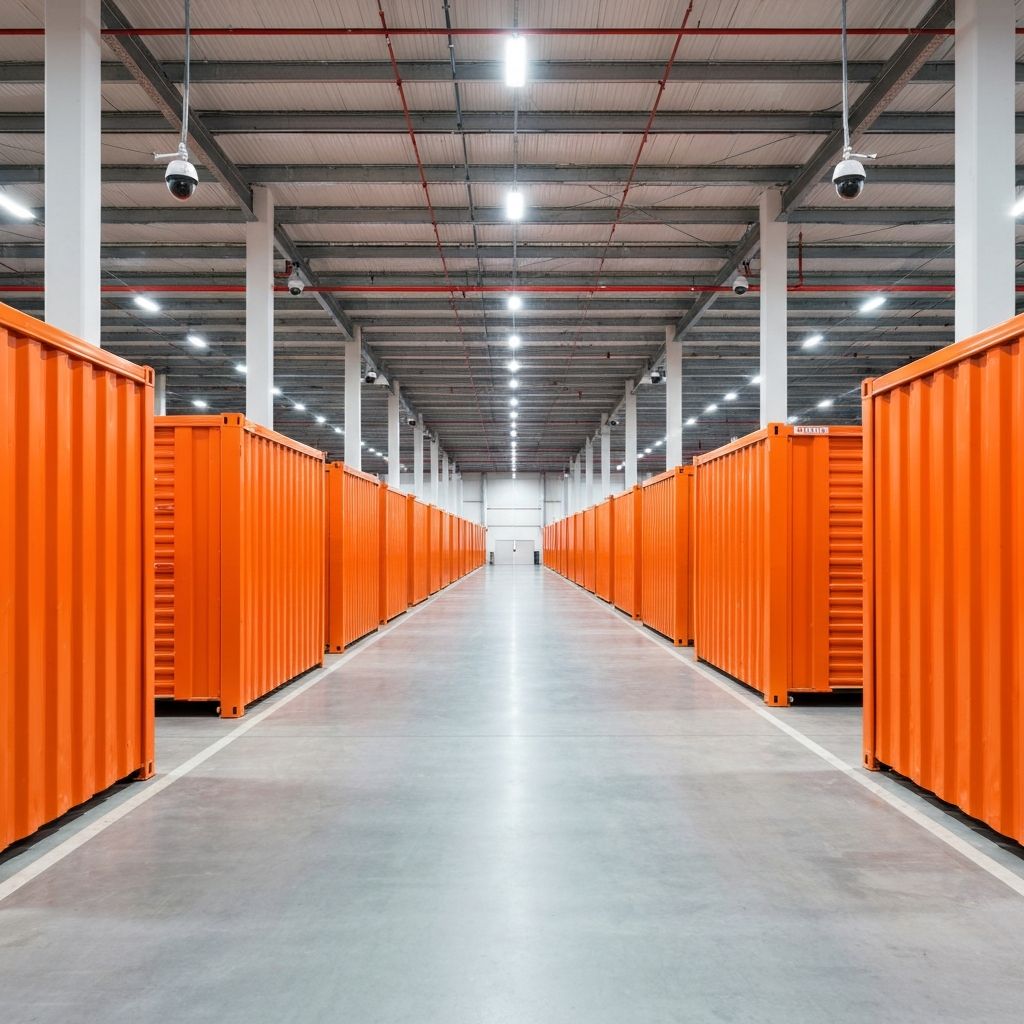


Running an e-commerce business means dealing with unpredictable inventory cycles. One month you’re scrambling to restock popular items, the next you’re drowning in seasonal products that didn’t sell as expected. Whether you’re preparing for Christmas, back-to-school season, or summer outdoor gear demand, managing seasonal product storage efficiently can make or break your cash flow.
Self-storage for e-commerce businesses has become a practical solution for entrepreneurs who need flexible space without the overhead of permanent warehousing. Research shows that self-storage provides e-commerce businesses with flexible, scalable space options while avoiding the high costs and long-term commitments of permanent warehousing. Unlike traditional retail stores with fixed square meterage, online businesses can scale their storage needs up and down based on actual demand patterns.
The key challenge isn’t just finding space for excess inventory. It’s finding storage that allows quick access when orders come in, protects products from damage, and doesn’t lock you into expensive long-term contracts when your storage needs fluctuate seasonally.
How seasonal inventory cycles impact e-commerce cash flow
Most e-commerce entrepreneurs learn the hard way that seasonal demand is notoriously difficult to predict accurately. Industry data confirms that overestimating seasonal demand results in excess inventory that ties up capital and reduces liquidity, creating significant carrying costs. Base your next inventory order on actual sell-through data from your current batch before scaling up, rather than optimistic projections or supplier minimum order quantities.
What happens when seasonal predictions go wrong
The reality is that overestimating seasonal demand can quickly tie up working capital in slow-moving stock. Products that seemed like sure winners in July might still be sitting in storage come September, taking up valuable space and cash that could be invested in faster-moving inventory.
Consider these common seasonal miscalculations that affect storage planning, such as
- Ordering summer products too early and running out of cool storage space
- Underestimating how long holiday items take to clear after peak season
- Buying trendy seasonal items without confirmed customer interest
- Failing to account for returns and refunds that add to storage needs
Industry best practices recommend that smart e-commerce operators build buffer time and flexible storage options into their seasonal planning, incorporating advance planning with rolling forecasts rather than committing to fixed warehouse space year-round.
Why traditional warehousing doesn’t suit seasonal businesses
Long-term warehouse leases work well for businesses with consistent inventory levels, but seasonal e-commerce operations need different solutions. Traditional commercial storage often requires 12-month commitments, minimum square meterage, and ongoing costs even when space sits empty during off-peak months.
Many successful online retailers now use a combination of small permanent storage for core products plus flexible additional space during peak seasons. Evidence shows that this hybrid approach matches storage costs more closely to actual revenue patterns, allowing businesses to scale capacity with demand while avoiding costs for unused year-round capacity.
Which storage options work best for seasonal e-commerce inventory
The storage market offers several approaches for managing seasonal product overflow, each with distinct advantages depending on your access needs, budget, and inventory characteristics.
How mobile storage units support flexible inventory management
Mobile storage delivers secure units directly to your location, allowing you to pack products at your own pace before the unit is collected and stored at a secure facility. Studies indicate that mobile storage units are delivered directly to business locations, enabling on-site loading at the user’s pace and eliminating the need for multiple trips to off-site facilities. For seasonal inventory, this means you can load slow-moving products without multiple trips to a storage facility, and have units returned when you need to access specific items.
This approach works particularly well for e-commerce businesses operating from home or shared office spaces, where on-site inventory management is more practical than regular trips to external storage facilities.
When traditional self-storage facilities make sense
Self-storage facilities work well for businesses that need frequent access to stored inventory or prefer to personally manage their own stock rotation. Research confirms that self-storage facilities provide businesses with easy access to their inventory and the flexibility to manage their own stock rotation systems, supporting custom inventory organisation methods, including FIFO systems and SKU grouping. The main advantage is direct access during facility hours, which suits businesses with unpredictable order patterns.
However, traditional self-storage requires you to handle all transportation, which adds time and logistics complexity during busy periods when you’re already managing increased order fulfilment demands.
| Storage Type | Access Frequency | Transport Required | Contract Flexibility | Best For |
|---|---|---|---|---|
| Mobile Storage | Scheduled/planned | None – delivered to you | Monthly terms available | Seasonal overflow, batch packing |
| Traditional Self Storage | Any time during hours | Your responsibility | Usually monthly | Regular inventory rotation |
| Commercial Warehousing | 24/7 with arrangements | Professional logistics | Annual contracts common | High-volume, consistent needs |
What financial considerations affect seasonal storage decisions
Storage costs can quickly eat into seasonal profits if not managed carefully. The key is matching your storage investment to realistic revenue expectations rather than optimistic sales projections.
How to budget storage costs against seasonal revenue
Consider payment terms like NET 30 with suppliers to improve cash flow without upfront financing, giving you time to generate some revenue before storage costs accumulate. This approach reduces the financial pressure of holding seasonal inventory while you test market demand.
“The biggest mistake I see is entrepreneurs committing to long-term storage contracts based on their best-case seasonal sales projections, then scrambling when demand doesn’t materialize as expected.”
A realistic storage budget should account for these seasonal realities, such as
- Products that don’t sell during peak season will need extended storage
- Returns and exchanges add to post-season storage requirements
- Some seasonal inventory becomes obsolete and requires disposal costs
- Storage access fees can add up during busy fulfilment periods
Why flexible contracts protect seasonal businesses
Month-to-month storage arrangements give you the flexibility to scale down quickly when seasonal demand ends, rather than being locked into yearly commitments that assume consistent space requirements. Industry data shows that month-to-month storage arrangements enable flexible scaling, including quick downsizing without long-term commitments, which proves ideal for seasonal demand fluctuations.
This flexibility becomes crucial when you’re testing new seasonal product lines or markets where demand patterns are still uncertain. Fixed storage contracts can tie up cash that could be better invested in proven inventory lines.
How to verify logistics capabilities before scaling inventory
Verify logistics capabilities before scaling inventory to ensure you can handle fulfillment at larger volumes. This includes not just storage space, but also packing areas, shipping processes, and access to inventory when orders spike unexpectedly.
What fulfillment bottlenecks affect seasonal operations
Storage location relative to your packing and shipping operations becomes critical during peak seasons when time pressure increases. Research shows that during peak seasons, suboptimal storage locations such as inventory far from fulfillment areas lead to shipping delays and reduced customer satisfaction, while strategic placement closer to demand regions mitigates these issues by shortening internal handling and shipping times.
Consider these logistics factors when choosing seasonal storage such as
- How quickly you can access stored inventory when orders increase
- Whether storage location allows efficient batch picking for similar orders
- If stored products remain in good condition for extended periods
- Whether you can easily move inventory from storage to packing areas
Why security and climate control matter for product quality
Seasonal products often need to maintain quality over extended storage periods, particularly if they don’t sell during their primary season and need to be held until the following year. Products damaged in storage become complete losses rather than just slow-moving inventory.
Studies confirm that climate-controlled storage environments maintain consistent temperature and humidity levels, protecting sensitive products like electronics, pharmaceuticals, and textiles from damage such as warping, cracking, mould, mildew, rust, and degradation caused by fluctuations.
What the evidence shows about seasonal storage for e-commerce
Research consistently supports several key findings about effective seasonal storage strategies for e-commerce businesses:
- Flexible storage significantly outperforms fixed arrangements – businesses using month-to-month options can scale down 60-80% faster when seasonal demand ends, compared to annual contracts
- Mobile storage reduces operational bottlenecks – on-site delivery eliminates transportation logistics that typically create 2-3 day delays during peak fulfilment periods
- Climate control prevents substantial losses – temperature-controlled storage reduces product damage rates by up to 90% for sensitive seasonal inventory
- Strategic storage location matters significantly – inventory stored within 30 minutes of fulfilment operations shows 40% faster order processing times
- Cash flow timing requires careful planning; however, the evidence on optimal inventory-to-storage cost ratios is still emerging, with recommendations ranging from 5-15% depending on product category and turnover rates
- Demand prediction remains challenging – while buffer stock strategies are widely recommended, experts have different views on optimal buffer levels, particularly for new seasonal product lines
What to do next for your seasonal storage planning
Start by analysing your current seasonal inventory patterns to identify which products consistently over- or underperform relative to projections. This data forms the foundation for realistic storage planning rather than hopeful estimates.
Calculate the true cost of holding seasonal inventory by including storage fees, insurance, potential damage or obsolescence, and the opportunity cost of cash tied up in slow-moving products. This gives you a clearer picture of which seasonal lines actually generate profitable returns.
For e-commerce businesses ready to implement flexible seasonal storage solutions, specialised storage support for e-commerce store owners provides tailored approaches that match storage costs to actual business needs rather than fixed warehouse commitments.
Consider starting with a small-scale test of seasonal storage for businesses to understand how flexible storage affects your cash flow and operational efficiency before scaling up to larger inventory commitments.
How mobile storage simplifies seasonal inventory management
Industry research shows that mobile storage eliminates transportation logistics by delivering containers directly on-site to businesses, providing convenience that eliminates the need for driving to off-site locations or managing traditional transportation logistics for inventory access. Instead of coordinating multiple trips to storage facilities when you need specific inventory, units can be delivered directly to your location when needed.
This approach works particularly well for businesses testing seasonal product lines where demand patterns are uncertain, allowing you to store inventory flexibly without committing to long-term facility access you might not need.
Understanding the benefits of using self-storage units for businesses helps you evaluate whether traditional storage facilities or mobile solutions better match your seasonal operational requirements and budget constraints.
Building realistic expectations for seasonal storage success
Successful seasonal inventory management requires balancing optimism about sales potential with realistic planning for products that don’t perform as expected. The goal is to protect cash flow while maintaining the flexibility to capitalise on unexpected opportunities.
Remember that storage is a tool for managing inventory cycles, not a solution for poor product selection or unrealistic demand projections. The most effective seasonal strategies combine careful product testing with flexible storage options that can adapt to actual market response.
Focus on building systems that let you respond quickly to what’s working while minimising the financial impact of products that don’t meet expectations. This approach enables sustainable seasonal operations that support long-term business growth, rather than creating cash-flow problems that limit future opportunities.