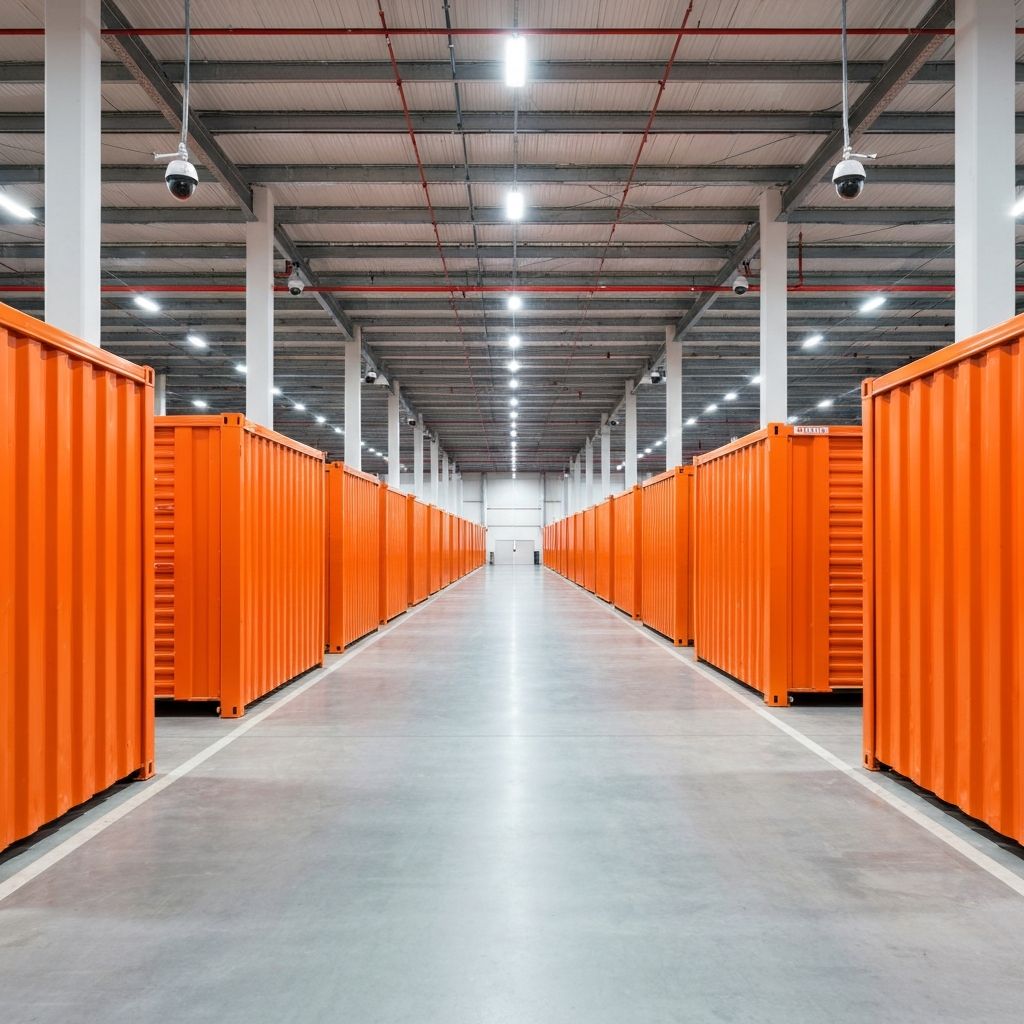


Running an e-commerce business from home often works well initially, but inventory challenges emerge quickly as sales grow. Your garage fills up, spare rooms become unusable, and you’re constantly juggling storage space with living space. Many online retailers find themselves stuck between expensive warehouse leases and cramped home operations.
Self storage for e-commerce businesses offers a practical middle ground. Research suggests that self storage provides a cost-effective alternative to expensive warehouse leases while avoiding the use of home space for inventory. Instead of signing costly commercial leases or converting your entire home into a warehouse, you can use storage units to house inventory while maintaining flexible packing and shipping operations. This approach has helped countless online sellers scale their operations without the financial risk of traditional commercial space.
The key is understanding how to set up storage-based operations effectively while navigating facility policies, managing access logistics, and planning for growth. Let’s explore how self storage can transform your e-commerce inventory management.
What makes self storage effective for e-commerce inventory
Self storage works particularly well for e-commerce businesses because it separates your inventory housing from your packing and shipping operations. Studies have found that with your inventory in a self storage unit, you can dedicate your primary workspace to order processing and fulfillment, streamlining workflows and reducing operational gridlock. Rather than trying to fit everything in one location, you can store bulk inventory in units while maintaining a streamlined packing area at home or in a small office space.
The most successful e-commerce storage setups involve regular restocking cycles. You visit your storage unit weekly or bi-weekly to replenish home inventory, then pack and ship orders from your primary location. This system keeps overhead costs manageable while providing the space needed for larger inventory volumes.
How storage-based fulfillment operations work in practice
Many online retailers develop efficient routines around storage-based inventory management. They dedicate specific days for storage unit visits, pulling products for the upcoming week’s expected orders. Some even set up basic packing stations within their units for immediate order fulfillment, though this requires checking facility policies first.
The approach scales naturally as your business grows. Industry standards indicate that self-storage enables easy scaling through flexible month-to-month rentals, allowing you to add additional units as needed without long-term commercial lease commitments. You’re not locked into long-term commercial leases, making it easier to adjust storage space based on seasonal demand or business changes.
What storage facility policies should e-commerce businesses understand
Before committing to storage-based operations, clarify what activities your chosen facility allows. Most storage providers welcome business inventory storage, but evidence shows that many facilities have restrictions on conducting operations inside units due to zoning laws and facility policies. Understanding these boundaries upfront prevents policy violations that could jeopardise your storage arrangement.
Some facilities explicitly prohibit setting up workstations, receiving customers, or conducting full-time business operations within units. However, accessing stored inventory, basic organising, and occasional packing activities are typically acceptable. The distinction often comes down to frequency and scope of on-site activities.
Which facility features support e-commerce operations
Look for storage facilities that offer convenient access hours, good lighting, and drive-up units for easy loading. Ground-floor units save time and effort when moving inventory regularly. Some newer facilities even provide business-friendly amenities like package acceptance or improved security features.
Climate-controlled units become important if you’re storing temperature-sensitive products, electronics, or items that could be damaged by humidity fluctuations. Research shows that climate-controlled units are crucial for protecting temperature-sensitive and humidity-affected products, preventing damage from mould, mildew, moisture, and extreme temperatures. While these units cost more, they protect inventory investments and maintain product quality.
How do storage costs compare to other e-commerce space solutions
Storage units typically cost significantly less than commercial warehouse space, especially in urban areas where commercial rents are high. A standard 10×10 unit might rent for $200-400 monthly, while equivalent commercial space could cost $1000 or more when factoring in minimum lease terms, utilities, and additional fees.
However, storage costs can increase substantially after promotional periods end. Industry research confirms that storage facilities commonly offer low introductory rates that increase significantly for existing customers, often within the first year. Budget for potential cost increases and factor these into your long-term planning to avoid unexpected expenses as your business grows.
| Storage Option | Monthly Cost Range | Access Flexibility | Setup Requirements |
|---|---|---|---|
| Self Storage Unit | $200-500 | Limited hours, regular access | Minimal, immediate |
| Commercial Warehouse | $1000-3000+ | 24/7 access | Lease terms, utilities, insurance |
| Shared Warehouse Space | $400-800 | Business hours | Moderate setup, shared facilities |
| Mobile Storage | $300-600 | On-demand access | Delivery scheduling |
What additional costs should you factor into storage-based operations
Beyond monthly rent, consider transportation costs for regular storage visits, any equipment needed for organising inventory, and potential insurance coverage for stored goods. Some e-commerce sellers invest in shelving systems, label makers, or portable lighting to improve unit organisation and efficiency.
Insurance coverage deserves particular attention. Evidence shows that standard storage facility insurance may not fully cover high-value business inventory, with coverage limits often capped at $1,500-$2,500. Check whether your existing business insurance extends to stored inventory or if additional coverage is needed.
Which equipment and setup approaches work best for storage-based e-commerce
Successful storage-based e-commerce operations often depend on having the right tools and organisation systems. Studies have found that thermal label printers improve packing efficiency compared to traditional labels due to faster printing speeds and simplified processes without ink or ribbons, allowing you to print shipping labels directly onto adhesive material without cutting and taping.
Portable solutions become valuable when working in storage environments. Battery-powered devices, mobile internet connections, and portable lighting help overcome common storage unit limitations like limited electrical access or poor lighting conditions.
“Investing in proper organisation and portable equipment transforms a basic storage unit into an efficient inventory management system that can scale with your business growth.”
How should you organise inventory within storage units
- Install shelving systems to maximise vertical space and improve inventory visibility
- Use clear storage boxes or bins that allow quick product identification
- Implement a simple inventory tracking system with location codes
- Keep frequently accessed items near the unit entrance
- Maintain clear walkways for safe movement within the unit
Good organisation pays dividends in time savings and reduced errors. When you can quickly locate specific products during restocking visits, your operations become more efficient and less stressful.
What safety and security considerations matter for business storage
Fire safety becomes particularly important when storing business inventory in enclosed spaces. Some e-commerce sellers invest in automatic fire suppression devices or portable fire extinguishers, especially when storing flammable materials or high-value inventory.
Security measures should match your inventory value and theft risk. Higher-end storage facilities typically offer better security features, but you can also add your own locks, security cameras, or inventory tracking systems for additional protection.
Which insurance and liability issues should you address
Review your business insurance coverage to ensure it extends to inventory stored off-site. Industry standards indicate that standard business insurance policies do not automatically cover inventory stored in self-storage units, and specialised coverage or riders are necessary. Document your stored inventory with photos and detailed records for insurance purposes.
Consider liability implications if you’re conducting any operations within storage units. While basic inventory access is typically covered, more extensive activities might require additional insurance considerations.
When should e-commerce businesses consider alternatives to traditional storage
As order volumes grow, some e-commerce businesses find that storage-based operations become cumbersome. Frequent trips to multiple storage units, increasing inventory complexity, or customer service demands might signal it’s time to explore other solutions.
Third-party logistics providers (3PLs) become viable alternatives once you reach consistent order volumes that justify their minimum requirements. Mobile storage solutions offer another middle ground, providing storage capacity that comes to your location rather than requiring regular facility visits.
What are the signs that you’ve outgrown storage-based operations
- You’re visiting storage units daily or multiple times per day
- Managing multiple storage locations becomes time-consuming
- Customer service demands require faster order fulfillment
- Inventory complexity makes storage organisation challenging
- Transportation costs for storage visits exceed potential savings
These indicators suggest your business might benefit from more integrated fulfillment solutions, whether through 3PL services, dedicated warehouse space, or mobile storage that adapts to your changing needs.
How do mobile storage solutions compare to traditional storage facilities
Mobile storage brings the storage unit to your location, eliminating regular trips to storage facilities. This approach works particularly well for e-commerce businesses that need periodic access to bulk inventory but want the convenience of on-site availability.
While the evidence is mixed on whether mobile storage costs more overall, it can save significant time and transportation costs. The convenience factor becomes especially valuable as your business grows and time efficiency becomes more critical than cost minimisation.
How can mobile storage specifically help e-commerce inventory management
Mobile storage solutions address many of the logistical challenges that e-commerce businesses face with traditional storage facilities. Research shows that mobile storage delivers units directly to business locations, eliminating the need for regular trips to distant facilities. Instead of scheduling regular trips to access inventory, mobile storage units can be delivered when needed and collected when full, providing maximum flexibility for growing online retailers.
This approach works particularly well for seasonal businesses or those with fluctuating inventory needs. Evidence shows that mobile storage provides flexibility for inventory management, enabling businesses to scale storage up or down based on seasonal demand without being bound by long-term warehouse leases. During busy periods, you can have storage units delivered for easy access to bulk inventory. During slower periods, units can be stored off-site, reducing on-site clutter while maintaining inventory security.
For e-commerce businesses looking to optimise their storage strategy, specialised storage solutions for e-commerce can provide the flexibility needed to manage inventory fluctuations without the constraints of traditional storage facilities.
Creative storage approaches can help online retailers think beyond basic inventory housing to develop systems that truly support business growth and operational efficiency.
What the research says about e-commerce storage solutions
- Self storage provides a proven cost-effective alternative to expensive warehouse leases for growing e-commerce businesses
- Separating inventory storage from packing operations improves workflow efficiency and reduces operational gridlock
- Climate-controlled units are essential for protecting temperature-sensitive products like electronics, cosmetics, and textiles
- Thermal label printers significantly improve packing efficiency compared to traditional paper labels
- However, the evidence is still emerging on the total cost comparison between mobile and traditional storage, as factors like usage patterns and transportation needs vary significantly between businesses
- Storage facility policies around business operations remain inconsistent, with experts having different views on what constitutes acceptable use
What should e-commerce businesses do next
Start by assessing your current inventory storage challenges and growth projections. Calculate the true costs of your existing setup, including time spent on inventory management, space limitations, and any productivity impacts from cramped working conditions.
Research storage options in your area, focusing on facilities with business-friendly policies and convenient access hours. Visit potential facilities to assess lighting, security, and ease of access for regular inventory management activities.
Consider whether traditional storage facilities or mobile storage solutions better match your operational needs. Mobile storage services can provide the flexibility many e-commerce businesses need without the logistical challenges of regular facility visits.
For comprehensive guidance on optimising business storage, explore how storage solutions improve business operations and review practical tips for maximising storage efficiency to ensure your chosen approach supports long-term business growth.
“The right storage solution should grow with your business, providing the space and flexibility needed today while adapting to tomorrow’s challenges.”
Key takeaways for e-commerce storage success
Self storage can effectively solve inventory challenges for growing e-commerce businesses when implemented thoughtfully. The key is understanding facility policies, planning for cost increases, and developing efficient systems for inventory access and management.
Success depends on matching your storage approach to your business’s specific needs, growth trajectory, and operational preferences. Whether through traditional storage facilities or mobile solutions, the goal is maintaining inventory accessibility while keeping overhead costs manageable.
Remember that storage-based operations work best as a scaling solution rather than a permanent end state. As your business grows, be prepared to evolve your storage strategy to match changing operational demands and customer service requirements.