
Choosing the right storage unit size can make the difference between a smooth storage experience and a stressful scramble for additional space. Whether you’re decluttering during a renovation, downsizing to a smaller home, or storing business inventory, getting the size right from the start saves both money and hassle.
Understanding how big of a storage unit you need involves more than just guessing based on the number of rooms in your home. Research from storage industry guides emphasises using detailed methods like item inventories, size calculators, and specific formulas rather than simple estimates. Factors like furniture size, packing efficiency, weight limits, and how you plan to access your items all play crucial roles in determining the ideal storage space.
This practical guide walks you through proven methods for estimating your storage needs, from room-by-room assessments to weight considerations, helping you make an informed decision that fits your budget and circumstances.
What factors determine storage unit size requirements
Several key factors influence how much storage space you’ll actually need, and understanding these upfront prevents costly mistakes later.
Why home size alone isn’t enough
While your home’s square footage provides a starting point, it doesn’t account for the density of your belongings or how efficiently you can pack them. Storage needs depend on the volume and type of items to be stored, not home size alone. A sparsely furnished large home might need less storage than a compact space packed with furniture and personal items.
The relationship between living space and storage needs varies significantly based on lifestyle factors. Families with children typically have more belongings per square metre than minimalist households, while people who collect books, artwork, or hobby equipment need proportionally more storage space regardless of home size.
How packing efficiency affects space calculations
Professional storage estimates often assume optimal packing conditions that don’t reflect real-world scenarios. When you’re packing yourself, irregular shapes, fragile items requiring extra protection, and the need to maintain access to certain belongings all reduce your effective storage capacity.
Stacking limitations also play a major role. Heavy items must stay on the bottom, fragile pieces need careful positioning, and frequently accessed items should remain near the front. These practical considerations typically reduce usable space, though industry experts note that real-world packing often achieves 70-82% of theoretical capacity.
Weight limits and their practical impact
Storage units have weight restrictions that can surprise first-time users. Moving container guidelines show typical weight limits ranging from 3,000-6,000 pounds depending on unit size, which sounds substantial until you consider that a typical household’s belongings often approach these limits.
Books, tools, kitchen appliances, and workshop equipment add weight quickly, though the evidence about commonly exceeding limits is mixed. If you’re storing items from a fully furnished home, weight constraints might require splitting your belongings across multiple units or choosing a larger size to distribute the load properly.
How to estimate storage needs room by room
A systematic room-by-room approach provides the most accurate foundation for sizing decisions, allowing you to account for both volume and the unique characteristics of different types of belongings.
What bedroom contents typically require
Each bedroom’s storage needs vary based on furniture size and personal belongings. Storage industry guides confirm that bedroom requirements depend on factors like furniture size, with twin beds requiring smaller units (5×10) while king bed frames need larger spaces (10×10 or more).
Clothing presents particular challenges because it’s difficult to compress efficiently while maintaining accessibility. Seasonal clothes, shoes, and accessories add significant volume that many people underestimate when calculating storage requirements.
How living areas affect space calculations
Living rooms and family areas often contain your bulkiest items such as sofas, entertainment centres, and coffee tables. While storage experts note these pieces can be challenging to arrange efficiently, the evidence on stacking difficulties is mixed, with some solutions available for better organisation.
Electronics require careful handling and climate considerations, often needing individual wrapping and strategic placement. Books and media collections can be surprisingly heavy while taking up considerable space, affecting both volume and weight calculations.
Why kitchen and dining items need special consideration
Kitchen belongings present unique storage challenges, though specific research on their weight and fragility characteristics is still emerging. Appliances, cookware, and dinnerware often require protective packing that increases their effective storage footprint.
Dining room furniture often includes awkwardly shaped pieces like chairs that don’t stack neatly and tables with removable legs that still consume significant space even when disassembled.
What storage unit sizes work for different situations
Understanding how storage unit dimensions translate to real-world capacity helps you visualise whether a particular size will meet your needs without paying for unnecessary space.
| Unit Size | Approximate Home Equivalent | Typical Contents | Weight Capacity Range |
|---|---|---|---|
| 5×10 (50 sq ft) | Large bedroom | Bedroom furniture, boxes, small appliances | 1,500-2,000 lbs |
| 10×10 (100 sq ft) | 1-2 bedroom apartment | Complete bedroom plus living room furniture | 3,000-4,000 lbs |
| 10×15 (150 sq ft) | 2-3 bedroom home (partial) | Multiple rooms of furniture, appliances | 4,000-5,000 lbs |
| 10×20 (200 sq ft) | 3-4 bedroom home (most contents) | Majority of household belongings | 5,000-6,000 lbs |
| 10×30 (300 sq ft) | Large family home | Complete household plus extras | 7,000-8,000 lbs |
When to choose smaller units strategically
Smaller units work well when you’re storing specific categories of belongings or plan to access items regularly. A 5×10 unit might suffice for seasonal decorations, sporting equipment, or business documents that don’t require frequent retrieval.
For partial home contents, such as during renovations affecting only certain rooms, a 10×10 unit often provides adequate space while keeping costs reasonable. This size works particularly well for apartments or when storing furniture temporarily between moves.
Why larger units sometimes prove more cost-effective
Choosing a slightly larger unit than your initial calculations suggest often prevents the need for additional storage space later. Industry recommendations support selecting a slightly larger unit to allow for easier access, efficient packing, and potential future additions while avoiding upgrade costs.
Larger units also provide better organisation opportunities, allowing you to create pathways for accessing stored items and maintaining better inventory control. This accessibility can justify the modest additional cost, especially for longer-term storage needs.
How to avoid common sizing mistakes
Learning from typical oversights helps you make more accurate estimates and avoid the frustration of discovering your chosen unit won’t accommodate your belongings.
“Most people underestimate their storage needs by focusing only on furniture and forgetting about all the boxes, personal items, and oddly shaped belongings that add up quickly. It’s almost always better to go slightly larger than to find yourself struggling to fit everything in.”
Why theoretical calculations often fall short
Mathematical formulas that convert home square footage to storage requirements rarely account for real-world packing challenges. Storage calculation guides confirm that basic mathematical volume calculations provide only rough estimates and fail to account for irregular shapes, packing inefficiencies, and access needs.
Weight-to-volume conversions prove particularly unreliable because they don’t account for air space between items and the limitations of stacking different types of belongings. Heavy books can’t be stacked as high as lightweight boxes, while fragile items need protective spacing.
How access needs affect size selection
If you plan to retrieve items occasionally, you’ll need to maintain pathways through your storage unit, effectively reducing usable space. Items you might need should remain accessible rather than buried behind other belongings.
Consider how you’ll arrange your belongings to balance space efficiency with accessibility. Frequently needed items require front placement, while long-term storage pieces can go toward the back, affecting your overall layout and space requirements.
What happens when you underestimate requirements
Choosing too small a unit creates multiple problems beyond simply running out of space. Cramming belongings into insufficient space increases damage risk, makes accessing items difficult, and often necessitates renting additional storage at higher per-unit costs.
The inconvenience of splitting belongings across multiple locations often outweighs the savings from choosing a smaller initial unit. Moving items between storage locations, managing multiple access points, and tracking belongings across different spaces adds complexity and cost.
When mobile storage offers sizing advantages
Mobile storage solutions provide unique benefits for sizing decisions, offering flexibility that traditional storage facilities can’t match.
How mobile units simplify size estimation
With mobile storage, you can pack at your own pace and assess space requirements gradually rather than making immediate sizing decisions. Mobile storage providers confirm this flexibility through scalable sizing, on-site placement, and the ability to load gradually while assessing needs over time.
The ability to have the storage unit delivered to your location eliminates transport constraints that often force compromises in traditional storage scenarios. You can take time to pack efficiently without pressure from facility access hours or the need to complete everything in a single trip.
Why flexible sizing reduces risk
Mobile storage providers often offer more flexible arrangements if your initial size estimate proves incorrect. Rather than being locked into a long-term contract for the wrong size, you can typically adjust your storage solution as your needs become clearer.
This flexibility proves particularly valuable during moves, renovations, or business transitions where storage requirements change as circumstances evolve. The ability to adapt your storage size without major penalties or logistics complications provides peace of mind during uncertain periods.
What the research says about storage sizing
Understanding the evidence behind storage size selection helps you make informed decisions based on industry best practices and proven approaches.
- Professional sizing methods work better than guesswork: Multiple storage guides confirm that detailed inventories and calculators provide more accurate estimates than simple room-count estimates
- Slightly oversizing prevents costly mistakes: Industry recommendations consistently support choosing units with extra capacity to accommodate packing inefficiencies and future needs
- Mobile storage offers proven flexibility advantages: Research shows portable storage units provide adaptable sizing solutions that reduce commitment risks compared to traditional facilities
- Packing efficiency varies significantly: While optimal packing achieves high space utilisation, real-world factors like irregular shapes and access needs consistently reduce effective capacity
- Weight limits matter more than expected: Storage containers have documented weight restrictions that can affect sizing decisions, particularly for dense household items
- Room-by-room assessment provides accuracy: Evidence shows systematic inventory approaches outperform general estimates for determining actual storage requirements
What to do next for accurate size planning
Taking specific steps to assess your storage needs systematically leads to better sizing decisions and fewer surprises during the packing process.
How to conduct a preliminary assessment
Start by listing major furniture pieces and their approximate dimensions, then identify the number of boxes you expect to generate from each room. This preliminary inventory helps establish a baseline for size calculations while highlighting items that might present special challenges.
- Measure large furniture pieces and note any disassembly options
- Estimate box quantities based on belongings in each room
- Identify heavy items that affect weight distribution
- Consider seasonal items and how often you’ll need access
- Account for protective materials and packing space requirements
Take photos of rooms and storage areas to help visualise how belongings will transfer to a storage environment. This visual approach often reveals items you might overlook in a simple mental inventory.
When to seek professional guidance
Complex storage situations benefit from professional assessment, particularly when dealing with valuable items, business inventory, or tight timing constraints. Storage professionals can provide realistic size estimates based on experience with similar situations.
Consider professional consultation if you’re storing items with special requirements, managing a business relocation, or dealing with estate contents where accurate sizing affects multiple stakeholders.
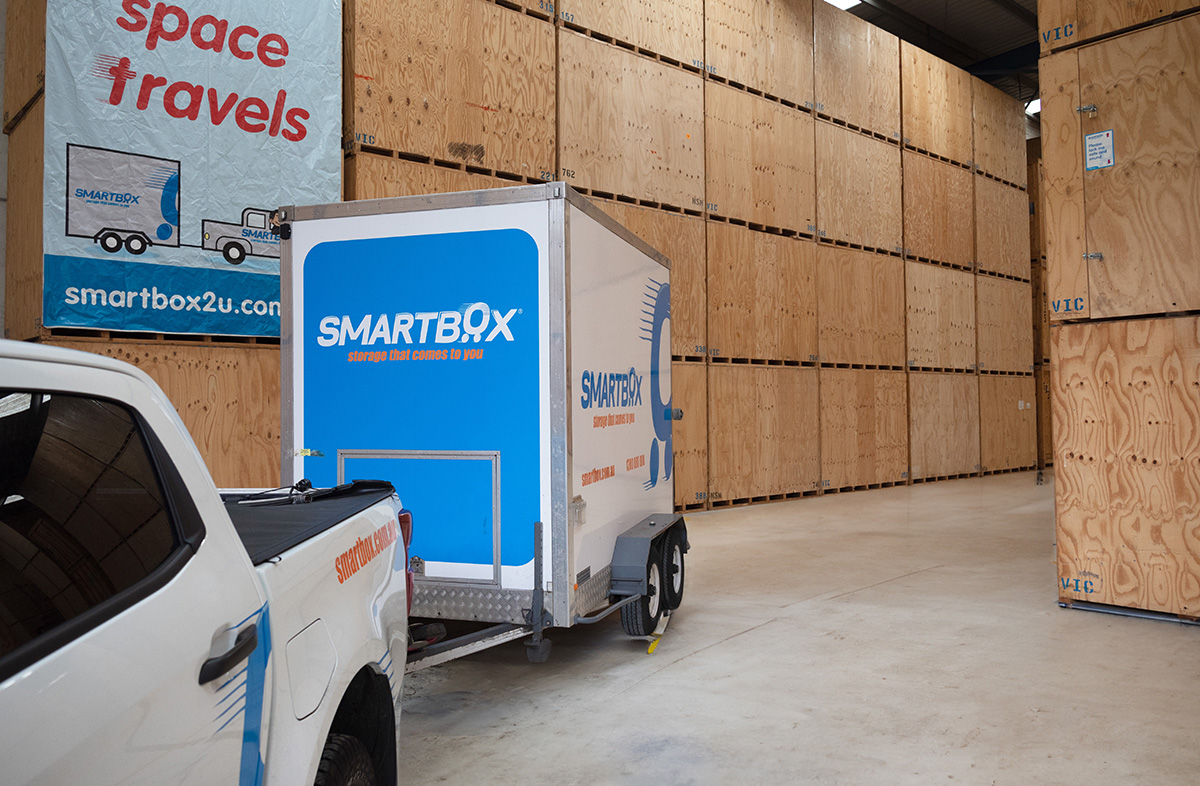
Smartbox provides personalised size consultations to help you select the right storage solution based on your specific circumstances. Our experienced team can assess your needs and recommend appropriate sizing to avoid both under-sizing problems and unnecessary costs from over-sizing.
Key takeaways for storage size selection
Choosing the right storage unit size requires balancing multiple factors beyond simple square footage calculations. Weight limits, packing efficiency, and access needs all influence your actual space requirements, often making slightly larger units more practical than initial estimates suggest.
Mobile storage solutions offer particular advantages for sizing decisions, providing flexibility to assess space needs gradually and adjust arrangements as circumstances change. This approach reduces the risk of costly sizing mistakes while accommodating evolving storage requirements.
Remember that underestimating storage needs typically costs more in the long run than modest overestimation, considering the inconvenience, additional fees, and logistics complications of securing supplementary space after your initial choice proves inadequate.