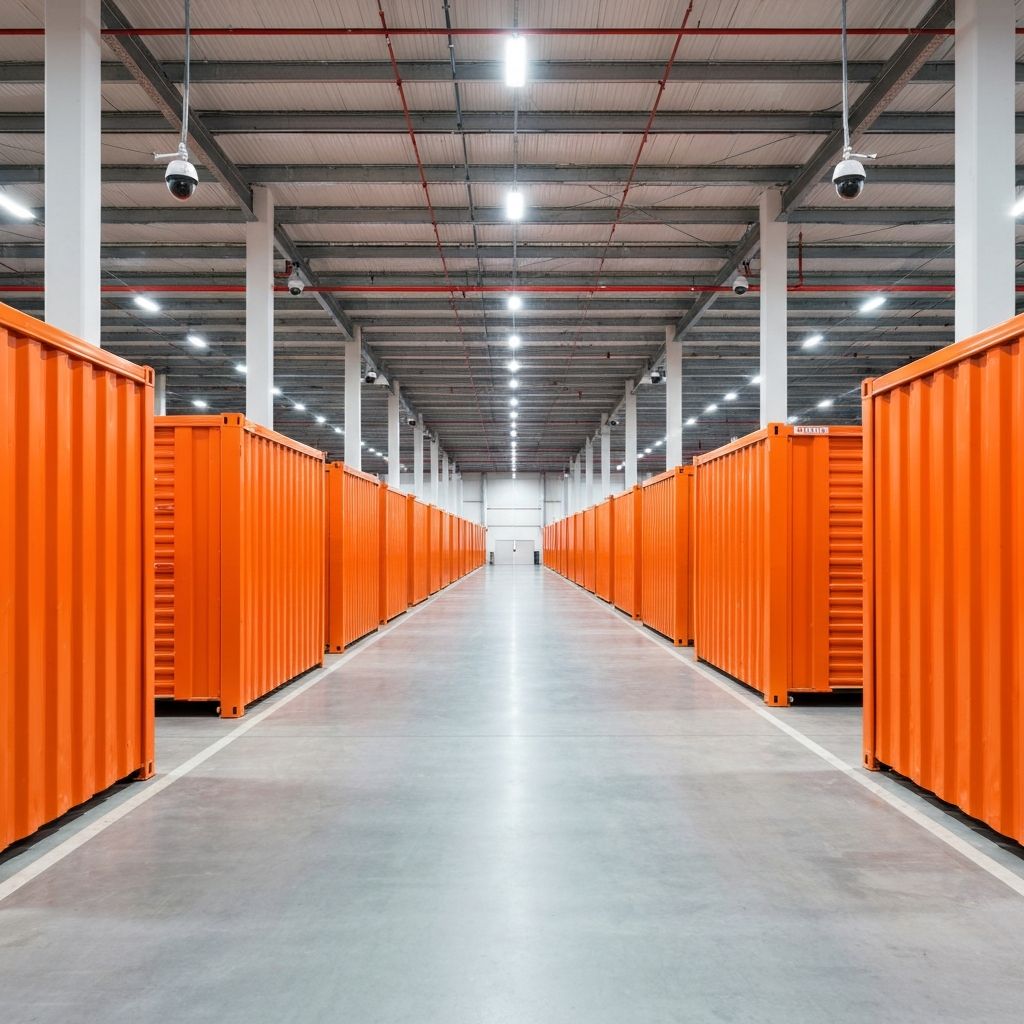

Choosing between industrial storage and self storage can feel overwhelming, especially when you’re comparing storage options for the first time. Both serve different purposes and come with distinct advantages that make them suitable for specific situations.
Industrial storage typically refers to large-scale warehouse facilities designed for businesses storing inventory, equipment, or bulk goods. These facilities prioritise capacity and cost efficiency over convenience and personal access. Self storage, on the other hand, offers individual units that you can access regularly, making it ideal for personal belongings, household items, and small business inventory.
Understanding the practical differences between industrial storage vs self storage will help you select the right solution based on your budget, access needs, and the type of items you need to store. Let’s explore what sets these storage types apart and when each option makes the most sense.
What Defines Industrial Storage Facilities
Industrial storage facilities operate on a completely different scale compared to traditional self storage units. These large warehouse spaces are designed to handle substantial volumes of goods, often measured in pallets rather than individual boxes or furniture pieces.
How Industrial Facilities Handle Large Scale Storage
Industrial warehouses typically feature high ceilings, forklift access, and loading dock facilities, which industry standards confirm are essential for efficient large-scale operations. The space is optimised for bulk storage rather than individual convenience, which means lower per-cubic-metre costs but limited personal access. Many industrial facilities operate with scheduled access times and may require advance notice for retrievals, as facility operators typically maintain restricted access policies compared to self storage options.
These facilities excel at storing large quantities of the same type of item, making them cost-effective for businesses with substantial inventory needs. However, the minimum space requirements often make them impractical for personal storage or small business needs.
What Types of Items Work Best in Industrial Storage
Industrial storage works particularly well for businesses storing manufacturing materials, seasonal inventory, or equipment that doesn’t require frequent access. The facilities can accommodate oversized items and hazardous materials with proper permits, following strict compliance standards for safe chemical storage. They can also provide temperature-sensitive goods in climate-controlled sections.
For personal use, industrial storage might make sense if you have large collections of items that you access infrequently, such as archived business records or seasonal decorations for large properties.
How Self Storage Units Operate Differently
Self storage units prioritise accessibility and convenience over pure cost efficiency. These facilities offer individual units that you can access on your schedule, with research showing that most provide 24/7 availability and personal security codes.
What Makes Self Storage More Accessible
Most self storage facilities provide drive-up access to your unit, trolleys for moving items, and extended hours that work around your schedule. You maintain complete control over your unit, can visit as often as needed, and don’t need to coordinate with facility staff for basic access.
This accessibility comes at a higher per-cubic-metre cost compared to industrial storage, but the convenience factor often justifies the expense for personal storage needs or small business inventory that requires regular access.
Why Self Storage Works for Personal and Small Business Needs
Self storage units come in various sizes, from small lockers suitable for documents and seasonal clothing to large units that can accommodate the contents of a four-bedroom home. This scalability makes them practical for diverse storage needs without requiring minimum volume commitments.
Small businesses often prefer self storage because they can start with a smaller unit and upgrade as their inventory grows, rather than committing to warehouse space they don’t yet need. Industry analysis confirms that self storage flexibility suits businesses that need to scale without long-term commitments.
“The key difference is that self storage gives you control and convenience, while industrial storage focuses on volume and cost efficiency for larger-scale needs.”
How Much Do These Storage Options Actually Cost
Pricing structures differ significantly between industrial and self storage, making direct comparisons challenging without understanding what’s included in each option.
Understanding Industrial Storage Pricing Models
Industrial storage typically charges by the pallet or cubic metre, with pricing guides showing that rates become more economical as volume increases. Many facilities require minimum commitments, either in space or duration, which can make them cost-prohibitive for smaller storage needs.
Additional costs may include handling fees for storing and retrieving items, insurance requirements, and potential transportation costs if the facility isn’t easily accessible from your location, though the evidence on standard additional charges varies between providers.
How Self Storage Pricing Compares
Self storage units charge monthly rent based on unit size, with rates varying significantly based on location, facility quality, and local demand. Current market conditions have pushed prices higher in many areas due to increased demand from people in transitional housing situations.
| Storage Type | Pricing Model | Typical Minimum | Access Costs |
|---|---|---|---|
| Industrial Storage | Per pallet or cubic metre | Multiple pallets or long-term contract | Handling fees for each access |
| Self Storage | Monthly unit rental | Month-to-month rental | Included in monthly fee |
When comparing costs, consider the total expense including access, insurance, and transportation. For smaller storage needs, replacing items often costs less than long-term storage, particularly for low-value or easily replaceable possessions.
Which Storage Type Suits Different Situations
The choice between industrial and self storage depends heavily on what you’re storing, how often you need access, and your budget constraints.
When Industrial Storage Makes Practical Sense
Industrial storage works best for businesses with substantial inventory that doesn’t require frequent access. Evidence suggests that industrial facilities become economical only at substantial volumes due to their large-scale design and operational requirements. Manufacturing companies, importers, and retailers with seasonal inventory often benefit from the cost savings and capacity that warehouse facilities provide.
For personal use, industrial storage might suit collectors with large volumes of items, families with extensive seasonal decorations, or people storing archived business records that require long-term preservation but minimal access.
When Self Storage Provides Better Value
Self storage excels for household moves, decluttering projects, and small business inventory that requires regular access. The flexibility to upgrade or downsize units as needs change makes it practical for evolving storage requirements.
- Household furniture and appliances during moves or renovations
- Personal belongings for downsizing or temporary housing situations
- Small business inventory requiring regular restocking
- Seasonal items like sporting equipment or holiday decorations
- Documents and files that need occasional access
What About Alternative Storage Solutions
Beyond traditional industrial and self storage facilities, several alternative solutions might better suit specific storage needs while offering different cost and convenience trade-offs.
How Mobile Storage Bridges the Gap
Mobile storage solutions deliver storage units directly to your location, allowing you to pack at your own pace before the unit is collected and stored at a secure facility. This approach combines the convenience of self storage with potentially lower costs than traditional facilities.
Mobile storage works particularly well for home renovations, moves, or decluttering projects where you need immediate access during packing but long-term storage afterwards. The door-to-door service eliminates transport costs and multiple facility visits.
When Peer-to-Peer Storage Options Work
Peer-to-peer storage platforms connect people who need storage space with property owners who have unused space available. These arrangements can offer significant cost savings compared to commercial facilities, particularly for long-term storage needs.
However, peer-to-peer options require careful attention to insurance coverage, access arrangements, and security measures. They work best for items that don’t require climate control or frequent access.
What the research says about storage options
- Industrial storage facilities are designed for large-scale operations with features like high ceilings, forklift access, and loading docks, making them suitable for substantial inventory volumes
- Self storage provides 24/7 access and personal security codes, offering flexibility that works well for frequent retrieval needs
- Small businesses benefit from self storage’s scalability, allowing them to start small and upgrade as inventory grows without long-term warehouse commitments
- Industrial storage becomes cost-effective only at substantial volumes, while the evidence on per-cubic-metre cost advantages varies between providers and situations
- Starting with smaller storage solutions and scaling up helps control costs and maintain flexibility as needs evolve
How to Choose the Right Storage Solution
Making an informed storage decision requires evaluating your specific needs against the practical realities of each option.
What Questions Should Guide Your Decision
Start by honestly assessing how often you’ll need to access your stored items. Daily or weekly access strongly favours self storage, while monthly or less frequent access opens up more cost-effective alternatives.
Consider the volume of items you’re storing and whether you have minimum space requirements. Industrial storage becomes economical only at substantial volumes, while self storage accommodates any amount from a few boxes to entire households.
How to Evaluate Total Costs Realistically
Calculate the complete cost including storage fees, insurance, transportation, and your time for accessing items. Don’t forget to factor in the inconvenience costs of limited access if you choose a less convenient but cheaper option.
For items with low replacement value, honestly assess whether storage costs exceed replacement costs over your expected storage period. This calculation often reveals that storage isn’t economically justified for common household items.
What to Do Next for Your Storage Needs
Once you understand the differences between industrial storage and self storage, the next step involves finding a solution that matches your specific requirements and budget.
For most personal storage needs and small business inventory, self storage or mobile storage provides the right balance of access, convenience, and cost. Industrial storage makes sense primarily for larger businesses with substantial volume requirements and minimal access needs.
Consider starting with a smaller storage solution and scaling up if needed, rather than committing to more space than you currently require. This approach helps manage costs while maintaining flexibility as your storage needs evolve.
[smartbox_shortcode type=”storage_quote_cta” service=”mobile_self_storage” audience=”residential_business”]
Key Takeaways for Storage Decision Making
The fundamental difference between industrial storage and self storage lies in their intended use, access model, and cost structure. Industrial storage serves large-scale, infrequent-access needs at lower per-unit costs, while self storage prioritises convenience and flexibility for smaller-scale requirements.
Your choice should align with how much you’re storing, how often you need access, and your total budget including hidden costs. Remember that storage costs can quickly exceed replacement costs for common items, making it important to be selective about what deserves storage space.
Mobile storage solutions offer an increasingly popular middle ground, providing storage convenience without the ongoing facility access requirements. Whatever option you choose, ensure it matches your actual usage patterns rather than theoretical future needs.